Sell Scrap Metal in Jeddah With a Clear Assessment
Selling scrap starts with identifying what you actually have.
Two loads can weigh the same and still be assessed differently. One may be mainly steel. Another may contain copper, aluminum, cable insulation, plastic, fittings, or several mixed metals.
That is why weight alone does not tell the whole story.
An initial assessment can usually begin with simple information. Take clear photos. Tell us what you believe the material is. Give an approximate quantity and send your Jeddah location.
You do not need to know a technical scrap grade before contacting us.
For a straightforward pile of clearly identifiable material, photos can help start the conversation quickly. A larger, mixed, unusual, or difficult-to-access load may need more information or a physical inspection before the final terms can be agreed.
The distinction between an initial assessment and a final offer is important.
A figure discussed from photographs should not automatically be treated as a guaranteed final price for material that has not yet been physically identified, graded, inspected, or weighed. Scrap specifications used in the recycling trade distinguish materials according to composition and preparation, which is why the actual material can matter as much as the estimated quantity.
Scrap Materials You Can Ask About
Material 01
Iron and Steel Scrap
Iron and steel are common in renovations, workshops, warehouses, construction sites, fabrication projects, and commercial properties.
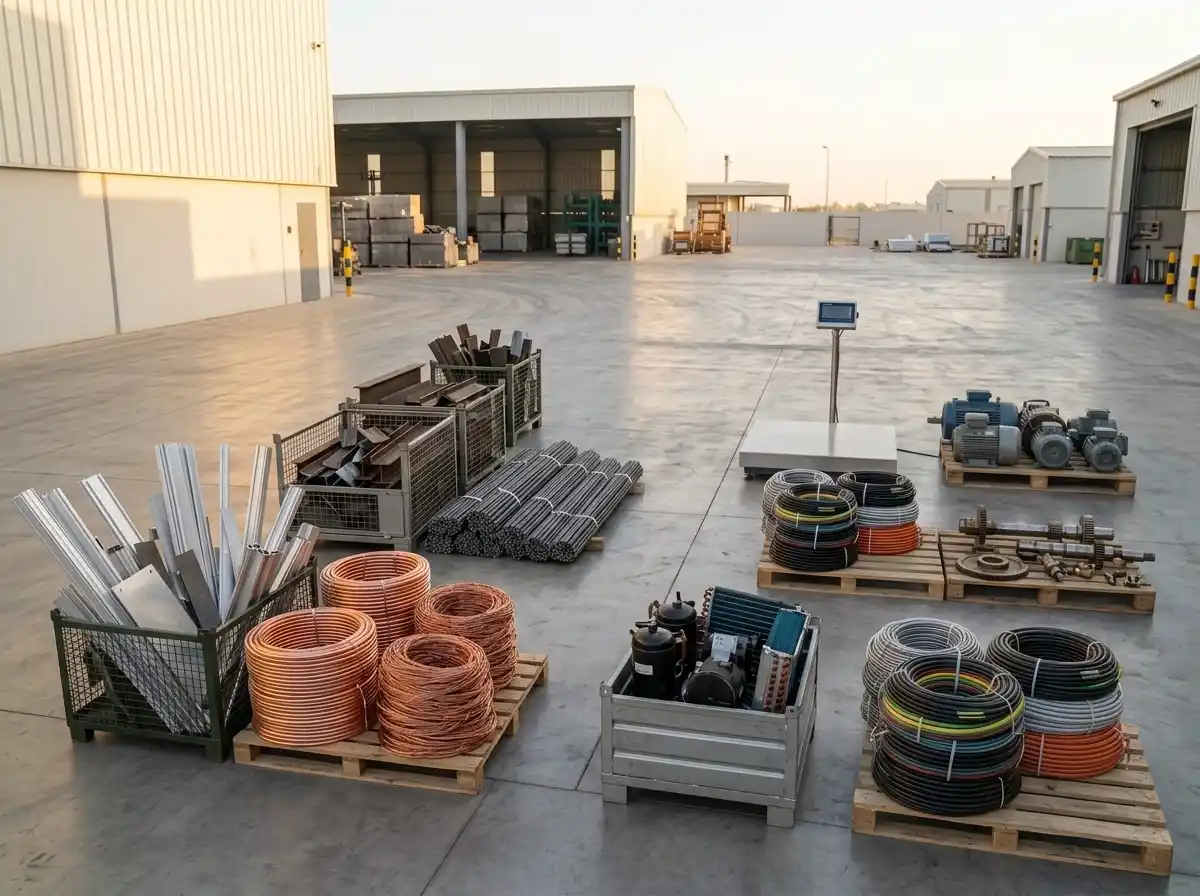
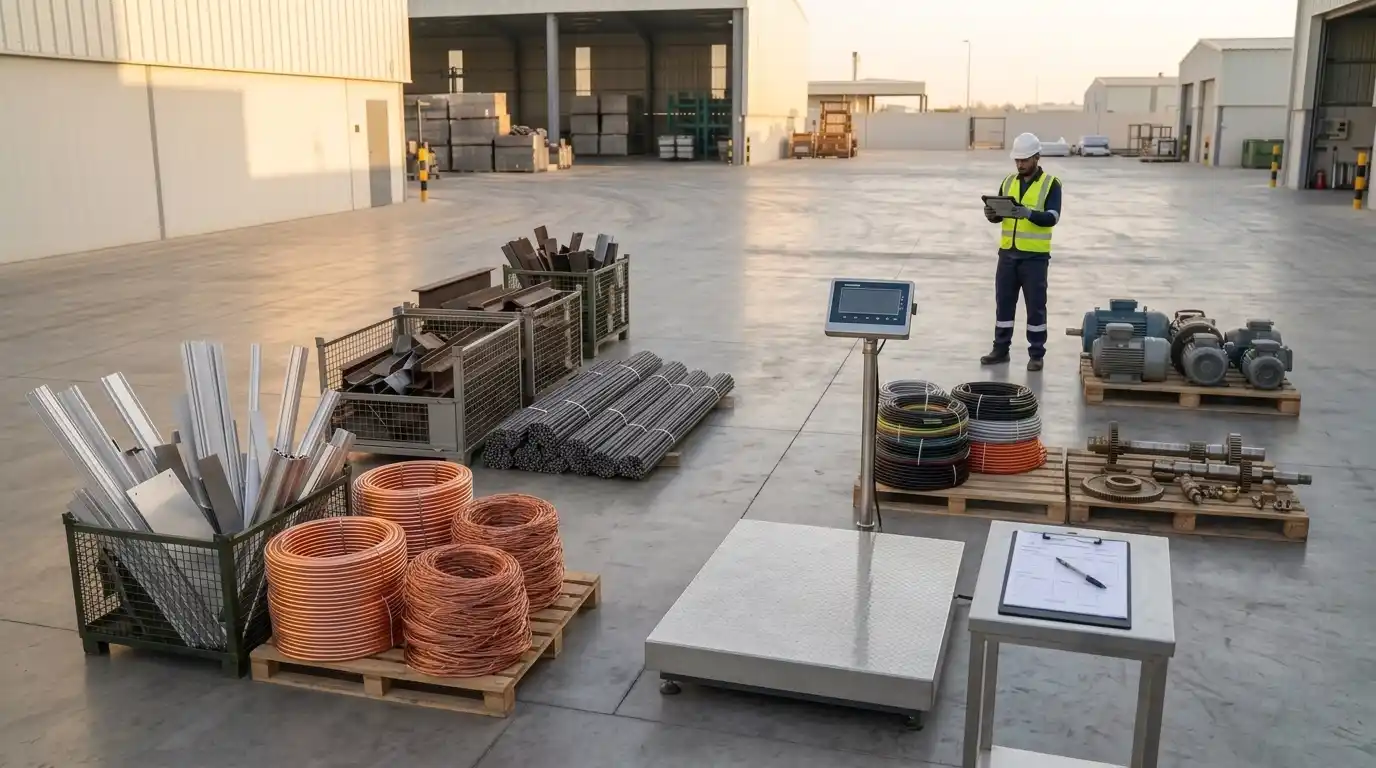
Examples can include steel sections, frames, pipes, sheet metal, rebar, fabrication offcuts, racks, and suitable metal fixtures.
A heavy item is not automatically a high-value item. The material category, condition, quantity, attachments, and amount of usable metal can all matter.
When sending photos, show both the complete quantity and a closer view of the material.
If steel, copper, and aluminum are already stored separately, photograph each group separately. There is no need to mix them together before asking for an assessment.
Material 02
Copper Scrap
Copper can appear in pipework, electrical cable, wire, coils, fittings, and equipment.
Not every copper-containing item is the same commercial material.
A clean piece of copper is different from insulated cable. Copper pipe with fittings is different from a motor that contains some copper. A cable can also contain insulation and other components in addition to its conductor.
For an initial enquiry, send a close photo and describe whether the material is pipe, wire, cable, coil, fittings, or equipment.
!
Do not burn cable insulation or dismantle electrical equipment simply to expose copper.
Material 03
Aluminum Scrap
Aluminum can be found in building profiles, window and door frames, sheet, fabrication sections, fittings, and some types of equipment.
As with copper, aluminum is not one universal scrap grade.
You do not need to identify the alloy yourself.
Send photos, explain where the aluminum came from, and show whether other metals remain attached.
Material 04
Cable and Electrical Scrap
Electrical cable should not be judged only by its total weight.
A cable may contain copper or aluminum conductors together with insulation, shielding, or other components. Different cable constructions can therefore contain different amounts of recoverable metal.
For an initial assessment, send:
a close photograph of the cable
a wider photograph showing the quantity
visible cable markings where available
the approximate length, coils, bundles, or weight if known
!Do not burn insulation.
!Do not cut wiring that is live or still connected.
!Do not open energized electrical equipment to prepare it for sale.
Material 05
AC and Cooling Equipment
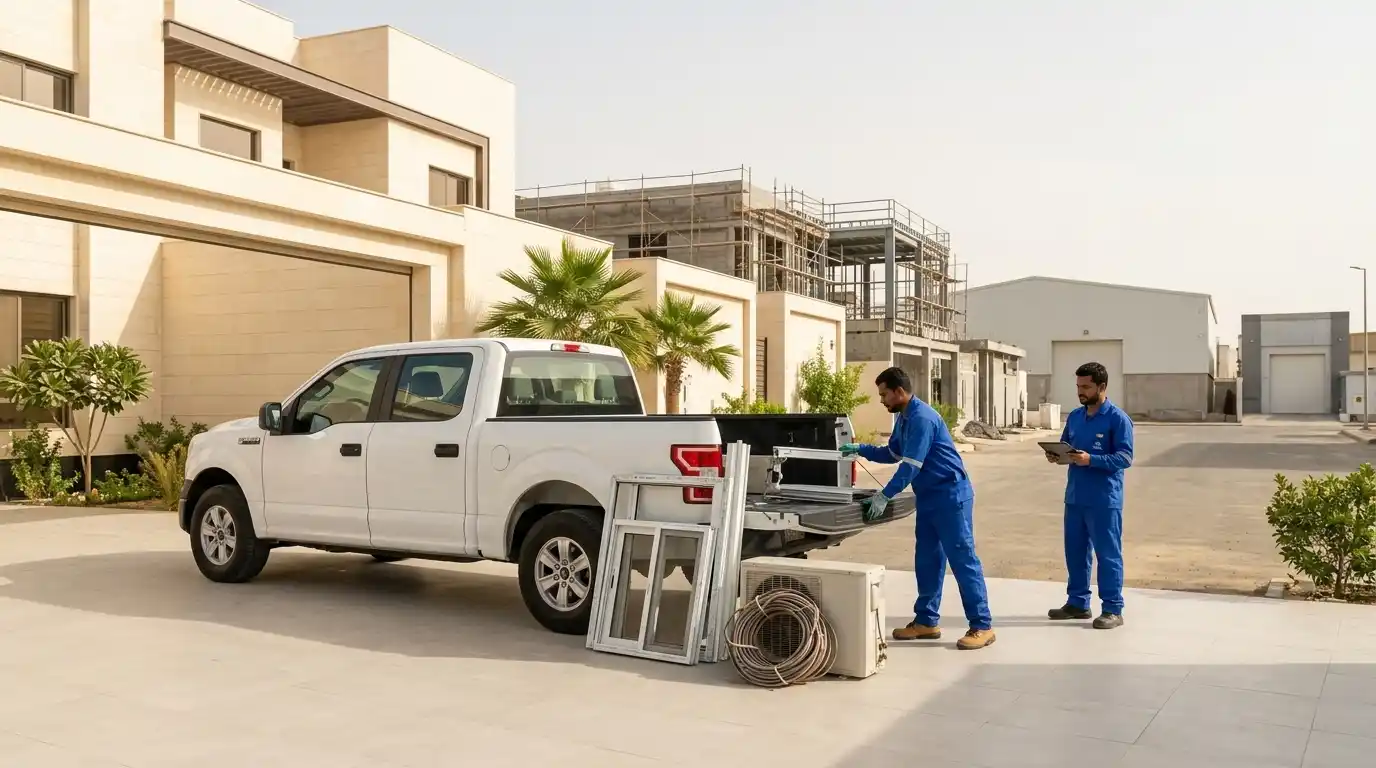
A complete AC unit, however, contains more than one material. It may include metal housings, coils, wiring, motors, compressors, and other components.
Send a photo of the complete unit and explain whether it is still installed or has already been professionally disconnected.
!
Do not cut refrigerant lines, release refrigerant, open pressurized components, or dismantle an installed system merely to expose metal.
Contact +966 53 976 6465 first to confirm whether the particular unit or components can be assessed.
You can also send photos of stainless steel, brass, and other identifiable metal.
When you are unsure what an item is made from, do not guess. Take clear photographs of the material, labels, manufacturer markings, fittings, and any exposed surfaces that already exist.
Avoid destructive testing when it creates sharp edges, electrical risk, chemical exposure, or another hazard.
For less common material, confirm acceptance before arranging collection.
Material 07
Motors, Generators and Machinery
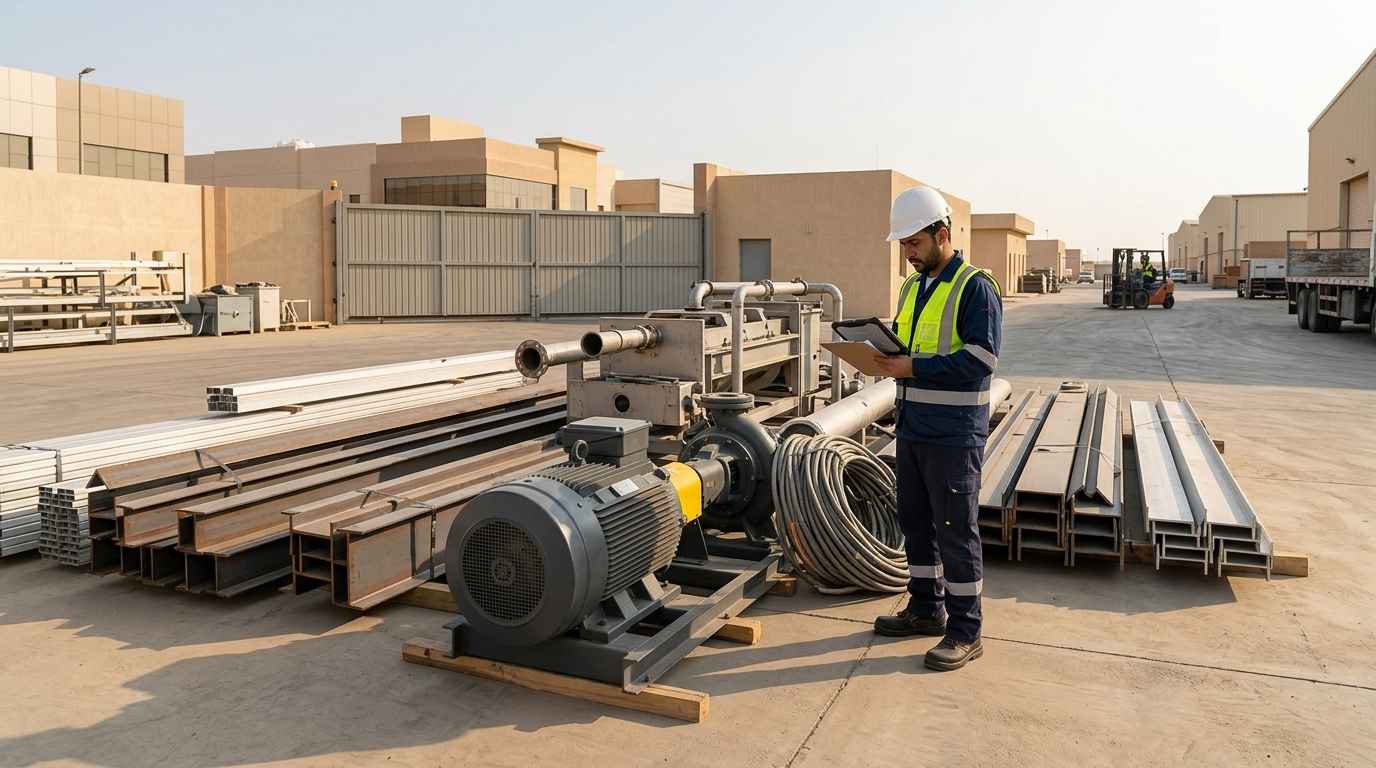
Motors, generators, and machinery can contain several metals, cables, housings, fluids, and non-metal components.
For a large item, a single close photograph is usually not enough.
Send:
photos from more than one angle
approximate dimensions
quantity
current condition
whether the item has been disconnected
where it is located
information about vehicle and loading access
!
Do not open energized or unfamiliar machinery simply to expose copper or other metal.
If equipment contains oil, chemicals, batteries, or unknown material, identify that before collection requirements are discussed.
Material 08
Construction and Project Metal
Construction, renovation, and fabrication projects can leave steel sections, rebar, pipe, aluminum profiles, frames, sheet, cable, and other metal.
For a project enquiry, give more detail than “a lot of scrap.”
Separate the information into material groups where possible. Include the site location, estimated quantity, required removal timing, access conditions, and any project restrictions.
If the load contains demolition waste or unidentified non-metal material, describe that separately rather than assuming the entire load will be treated as ordinary metal scrap.
How Scrap Metal Prices Are Determined in Jeddah
How is scrap metal priced?
A scrap offer can depend on the metal type, grade, weight, quantity, purity, attached material, contamination, condition, recoverable metal, and collection requirements. Broader metal-market conditions can also influence commercial offers.
There is no responsible single price that applies to every scrap load.
Metal Type and Grade
The first question is what material is actually being sold.
Iron and steel have different commercial characteristics from copper. Copper differs from aluminum. Even materials within the same metal family can have different grades or preparation standards.
That is why an accurate assessment should start with the actual material rather than only an estimated weight.
Weight and Quantity
Weight matters in many scrap transactions, but the final payable weight should be clear.
For a small enquiry, an approximate quantity may be enough to begin.
For a larger load, ask how final weight will be established and whether clearly different material categories will be treated separately.
If you are comparing two offers, make sure both offers refer to the same estimated material and the same basis of weight.
Purity, Attachments and Contamination
Scrap can include plastic, rubber, insulation, dirt, coatings, fasteners, liquids, other metals, or attached components.
This does not mean you should aggressively dismantle everything yourself.
Safe separation is useful.
Unsafe cutting, burning, opening, or draining is not.
Mixed Versus Separated Scrap
Imagine two loads with the same total weight.
One contains steel and aluminum stored in separate groups. The other contains those metals mixed together with plastic and general debris.
The second load may require more identification, sorting, and handling.
Where different loose metals are already safely separated, keeping them that way can make the assessment easier.
Ask whether different categories will be valued separately before agreeing to sell a mixed load.
Site Access and Collection Conditions
The physical location of scrap matters to collection planning.
A pile beside an accessible loading area is different from a heavy item inside a villa, on an upper floor, behind a narrow gate, in underground parking, or inside an active industrial site.
When contacting us, mention:
gate or security access
floor level
stairs or lifts
basement parking
vehicle access
loading restrictions
unusually large or heavy items
site working-hour restrictions
That information helps collection requirements be discussed before the visit.
Current Metal-Market Conditions
International metal benchmarks can influence commercial negotiations, but they are not a ready-made local Jeddah scrap price.
Local scrap still has its own grade, contamination, recoverable content, quantity, and logistics.
For this reason, this homepage does not publish a permanent “today’s scrap price per kilogram” table.
A price without a date, grade, and clear material definition can become misleading quickly.
What to Send for an Initial Scrap Assessment
A useful WhatsApp message can save several rounds of questions.
Start with contact.
Call or WhatsApp +966 53 976 6465.
02
Share the material.
Send photographs, the approximate quantity, and your Jeddah location.
03
Provide access details.
This is especially important for villas, apartment buildings, warehouses, factories, and large equipment.
04
Complete an initial assessment.
The material information can be reviewed and additional details requested where needed.
05
Arrange physical assessment when necessary.
Mixed, large, industrial, or unusual material may need to be seen before final terms are confirmed.
06
Confirm material and quantity.
The material category, condition, agreed weighing method, and collection requirements should be understood.
07
Agree the final offer.
Confirm what the offer covers before the scrap is removed.
08
Complete the transaction.
Payment should follow the payment method agreed between the seller and buyer.
The important point is simple: know when an initial discussion becomes a final agreement.
Scrap for Homes, Contractors and Businesses
Different sellers have different requirements.
Homes, Villas and Residential Properties
Renovation or replacement work can leave metal frames, pipes, cable, AC-related material, aluminum profiles, fixtures, and other metal.
Before moving a heavy item, send a photo.
For a villa or compound, mention gate access and where the scrap is stored.
For an apartment, mention the floor, lift access, stairs, basement restrictions, and building-management requirements.
This is especially useful in areas such as Al Shati, Al Hamra, Al Rawdah, Al Zahra, Al Murjan, and Obhur, where residential properties can include villas, compounds, towers, and managed buildings.
Contractors and Construction Sites
Contractors usually know more about the origin of their material.
Send photographs by material group, an approximate quantity, the project location, site-entry requirements, and the intended collection window.
Where the material belongs to a client, developer, or main contractor, ensure the person arranging the sale has appropriate authority to release it.
Factories and Industrial Facilities
Industrial enquiries often require more preparation.
A factory may have fabrication offcuts, structural metal, machinery, cables, motors, or mixed material. Instead of describing everything as “factory scrap,” prepare a simple inventory.
Mention recurring material separately from one-time clearance material.
Also identify oils, batteries, chemicals, electronic equipment, or any other unusual component rather than mixing it into an ordinary metal description.
Workshops
Fabrication and maintenance workshops may generate repeated offcuts, pipe, frames, replaced components, motors, or equipment.
If material grades are already known, keep that information with the load.
Do not mix a clearly separated non-ferrous material into general steel merely for convenience.
Warehouses and Commercial Properties
A warehouse or commercial clearance should distinguish scrap from reusable stock, rented equipment, leased assets, and property belonging to another party.
For larger clearances, photograph the whole area and then the main material groups.
Document which items have been authorized for removal.
Industrial and Project Scrap in Jeddah
Large scrap projects deserve a project-level assessment.
Begin with a simple inventory.
It does not need to be perfect. “Steel sections, aluminum profiles, cable and four large machines” provides far more useful information than “lots of scrap.”
Take wide photographs of the site.
Then take close photographs of the main material groups.
For large equipment, provide:
approximate dimensions
estimated weight if reliably known
current operating or disconnected status
whether oil, batteries, or other material remains inside
floor or yard location
vehicle access
loading-zone availability
Also explain the site itself.
Does security require identification?
Is there a specific access gate?
Are collection vehicles restricted to particular hours?
Is the scrap inside an active work area?
Are there height, width, or underground-parking restrictions?
Who has authority to approve removal?
A good industrial enquiry gives the buyer enough context to determine what needs to be assessed before commercial terms are agreed.
How to Prepare Scrap Safely
Good preparation should make an assessment easier without creating new risk.
✓
Take photographs before moving difficult items.
✓
Keep clearly different loose metals separate when this can be done safely.
✓
Keep ordinary rubbish away from already separated metal where practical.
✓
Make the collection area reasonably accessible.
Do not burn cable insulation.
Do not cut live electrical wiring.
Do not open energized equipment.
Do not release refrigerant from AC systems.
Do not cut sealed or pressurized components.
Do not drain unknown industrial fluids.
Do not dismantle unfamiliar machinery simply to recover copper or aluminum.
Do not attempt to move equipment beyond your safe lifting capacity.
If a load contains chemicals, oil, batteries, electronic waste, refrigerants, or unidentified material, describe those items before assuming they can be handled as ordinary metal scrap.
Before You Accept a Scrap Offer
A large headline number means little if you do not know what it is based on.
Before agreeing, clarify:
What material category is being valued?
Ask whether the quote assumes iron, copper, aluminum, mixed metal, cable, machinery, or another grade.
Is the material separated or being treated as one mixed load?
Different material groups may have different commercial values.
How will the weight be established?
For larger loads, understand when the payable weight becomes final.
Does the offer include collection conditions?
Ask whether loading, transport, difficult access, or special handling changes the transaction.
Can the initial estimate change after inspection?
If yes, understand what could change it: material identification, grade, contamination, weight, or access.
What payment method will be used?
Confirm the method and timing before removal.
This approach lets you compare offers on the same basis instead of comparing two headline numbers that may refer to different grades or conditions.
Responsible Scrap Handling in Saudi Arabia
This is especially relevant when a load contains more than ordinary separated metal.
Never assume that batteries, chemicals, oils, hazardous material, or other special waste can be handled under the same conditions as normal metal scrap.
Scrap Service Across Jeddah
Our service area is Jeddah citywide.
You can contact us from residential, commercial, coastal, northern, central, southern, or industrial parts of the city.
Priority areas include:
Al Shati, Al Hamra, Al Rawdah, Al Zahra, Al Murjan, and Obhur.
These are examples, not the full service area.
For villas, compounds, apartments, commercial buildings, workshops, construction sites, warehouses, and other locations, send your precise Jeddah location with the scrap details.
Access conditions can differ from one property to another, so mention gates, security, lifts, basements, loading areas, or other restrictions in advance.
Al Shati
Al Hamra
Al Rawdah
Al Zahra
Al Murjan
Obhur
You can send details of iron, steel, copper, aluminum, cable, AC-related scrap, motors, machinery, construction metal, and other recyclable metal. Exact acceptance depends on the actual item and condition, so send photos before arranging collection.
02
How is scrap metal priced in Jeddah?
Value can depend on metal type, grade, actual weight, quantity, contamination, recoverable content, condition, access, collection requirements, and current market conditions. There is no single rate that applies to every scrap load.
03
What should I send on WhatsApp?
Send clear photos, the material type if known, approximate quantity, your Jeddah location, and access information. For machinery or large equipment, add approximate dimensions and whether the item has already been disconnected.
04
Is an estimate from photos the final price?
Not necessarily. Photos can support an initial assessment, but final terms may depend on physical material identification, grade, weight, condition, contamination, and collection requirements.
05
Is copper assessed differently from iron?
Yes. Copper and iron are different material categories.
06
How is insulated cable assessed?
Cable assessment can consider the conductor material, insulation, cable construction, quantity, and recoverable metal content. Do not burn insulation or cut live cable to prepare it for sale.
07
Can I ask about an old AC unit?
Yes. Send photographs and say whether it is still installed or has already been professionally disconnected. Acceptance and collection requirements can then be confirmed. Do not release refrigerant or cut sealed lines yourself.
08
Should I separate metals before selling?
If different loose metals are already easy and safe to separate, keeping them apart can simplify identification. Do not dismantle electrical, sealed, pressurized, or hazardous equipment merely to separate metal.
09
How can I compare two scrap offers?
Check that both offers refer to the same material grade, quantity, weighing basis, and collection conditions. Also ask about any loading or transport adjustments and when an initial estimate becomes final.
10
How do I know how my scrap will be weighed?
Ask how the weight will be established, whether different material categories will be weighed separately, and when the final payable weight becomes agreed. The exact weighing method used by this business should be confirmed during the transaction.
11
Can factories and warehouses request an assessment?
Factory, warehouse, workshop, and project enquiries can be discussed. Send an approximate inventory, photos, quantity, location, access restrictions, and large-item details first so the requirements can be assessed.
12
Do you serve Al Shati, Al Hamra, Al Rawdah, Al Zahra, Al Murjan and Obhur?
Yes. The service area is Jeddah citywide, and these districts are included within the Jeddah coverage.